




Plenary Speakers
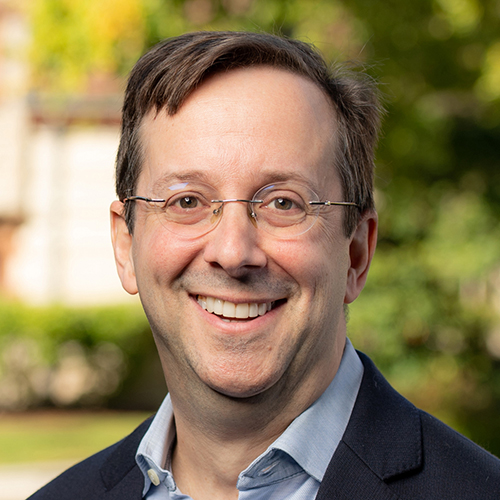
Leigh R. Hochberg
Massachusetts General Hospital
Leigh R. Hochberg, MD, PhD, FAAN, FANA is a neurointensivist and vascular neurologist at Massachusetts General Hospital, where he is the Cote Family TGS Endowed Chair in Neurotechnology and Director of the Center for Neurotechnology and Neurorecovery at Mass General Brigham, and Senior Lecturer on Neurology at Harvard Medical School. He is also the L. Herbert Ballou University Professor of Engineering and Professor of Brain Science at Brown University, and Associate Director of the VA Center for Neurorestoration and Neurotechnology in Providence. For more than 17 years, Leigh has been the IDE Sponsor-Investigator and PI of the BrainGate clinical trials, conducted by a consortium of scientists and clinicians at Brown University, Emory University, Massachusetts General Hospital, VA Providence Healthcare, Stanford University, University of California – Davis, Baylor College of Medicine, and Rice University. He was a member of the Exploratory Committee (2013) and then a Founding Executive Board Member (2015-2018) of the BCI Society. He sits on the executive board of the American Society for Neurorehabilitation (ASNR), and is Organizer of the Implantable BCI Collaborative Community (iBCI-CC), a multi-stakeholder forum dedicated to advancing regulatory science in iBCIs. His research focuses on developing neurotechnologies for the restoration of communication and mobility for people with neurologic disease or injury.
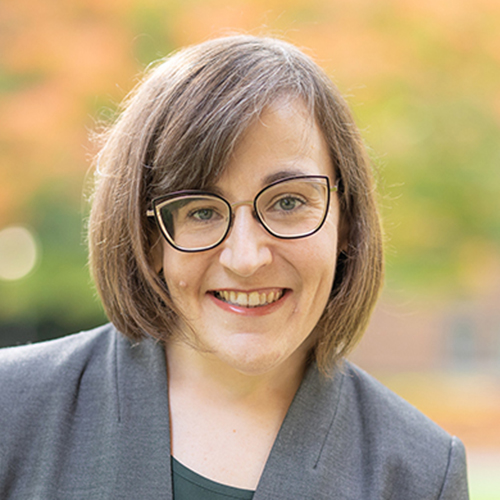
Amy Orsborn
University of Washington
Dr. Orsborn is a Cherng Jia and Elizabeth Yun Hwang Associate Professor in the departments of Electrical & Computer Engineering and Bioengineering at the University of Washington. Her lab explores Brain Computer Interfaces as adaptive closed-loop systems that engage neural plasticity and adaptation. Her work aims to build adaptive BCIs that can intelligently “co-learn” with the brain to make restorative devices more robust long-term and expand rehabilitation applications. Towards that goal, she develops algorithmic methods for co-learning and studies the neural mechanisms of learning in BCIs. She completed her Ph.D. at the UC Berkeley/UCSF Joint Graduate Program in Bioengineering where she first began developing adaptive algorithms for BCI and demonstrating that these algorithms can co-learn with the brain to improve system performance. In her postdoctoral training at NYU’s Center for Neural Science, she developed novel neural implants for multi-scale, multi-modal interrogation and monitoring of neural circuits in non-human primates. She’s received the NSF CAREER award, a Sloan Fellowship, a Fulbright fellowship, was selected as a National Academies of Science Kavli Fellow, and was named an Emerging Leader by the American Institute of Medical and Biological Engineering. She is a co-founder of Women in Neural Engineering (WINE), a mentoring network that aims to help keep neural engineering an inclusive field where everyone can succeed.
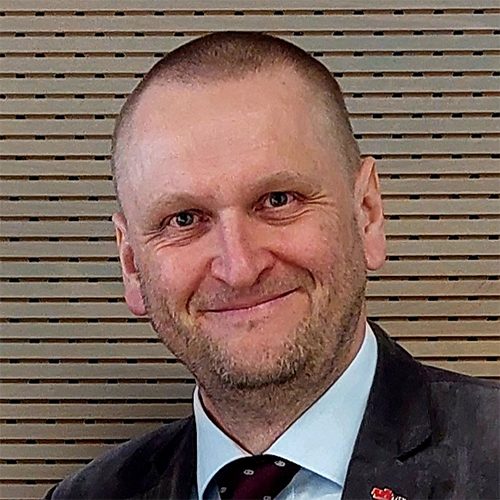
Gernot Müller-Putz
Graz University of Technology
Prof. Dr. Gernot Müller-Putz is head of the Institute of Neural Engineering and its associated Laboratory of Brain-Computer Interfaces. He received his MSc in electrical and biomedical engineering in 2000, his PhD in electrical engineering in 2004 and his habilitation and “venia docendi” in medical informatics from Graz University of Technoloy in 2008. Since 2014 he is full professor for semantic data analysis. He has gained extensive experience in the field of biosignal analysis, EEG/ECoG-based brain-computer interface research, BCIs for neuroprosthesis control, communication with BCI in patients with disorders of consciousness, hybrid BCI systems, the human somatosensory system, and BCIs in assistive technology. He has also managed several national projects (State of Styria) and international projects (Wings for Life, EU Projects) and coordinated the EU Horizon 2020 project MoreGrasp. Furthermore, he organized and hosted seven international Brain-Computer Interface Conferences over the last 25 years in Graz, the next one (10th GBCIC) in Sept. 2026. In 2014/15 he was Guest editor in chief of a special issue of the Proceedings if the IEEE “The Plurality of Human Brain-Computer Interfacing”. Since August 2019 he is Speciality Editor in Chief of Frontiers in Human Neuroscience: Brain-Computer Interfaces. He is Associate Editor of IEEE Reviews in Biomedical Engineering. He has authored more than 219+ peer reviewed publications and more than 230+ contributions to conferences which were cited more than 31800 times (h-index 83). In 2015, he was awarded with an ERC Consolidator Grant “Feel your Reach” from the European Research Council. In May 2017 he received the Ludwig-Guttman Award from the German Medical Spinal Cord Injury Association (DMGP). From 2018 he part of the Board of Directors of the International Brain-Computer Interface Society and served as Tresurer until June 2025. In May 2019 he received a research award from the State of Styria “Digitalisierung in der Wissenschaft”. He is founding member and scientific Co-Director of the NeuroIS Society. Since 2024 he is board member of the Austrian Society for Biomedical Engineering. With October 2023 he was elected to be the Dean of the Faculty of Computer Science & Biomedical Engineering. In autumn 2025 he was elected Fellow of the International Academy of Medical and Biological Engineering.